Dunalley Primary School Learning and achieving together
Year 6 26/27
Autumn Term 2026
Welcome
We have been truly impressed with the children’s commitment and enthusiasm at the start of this new year as well as their sensible attitudes towards one another. They are already showing themselves to be excellent role models for the whole school. Below is an overview of the exciting learning we have planned for this term.
Reading
Reading will continue to be taught throughout the week and will cover fiction, non-fiction and poetry. Please continue to support your child’s reading by ensuring that they read at least 5 times per week and providing at least one signature each week in their reading record. Reading records will be checked each week.
Writing
The children will continue to develop their writing skills through a variety of genres and writing for different purposes. To begin with, their work will be inspired by our class novel, Holes by Louis Sachar. They will practise narrative techniques, drawing on the novel’s characters and events, with a focus on creating atmosphere through vivid settings and the effective use of dialogue. Later in the term, further writing opportunities will link with their geography learning, allowing the children to demonstrate their understanding of rivers and flooding through carefully structured pieces.
Spelling and grammar
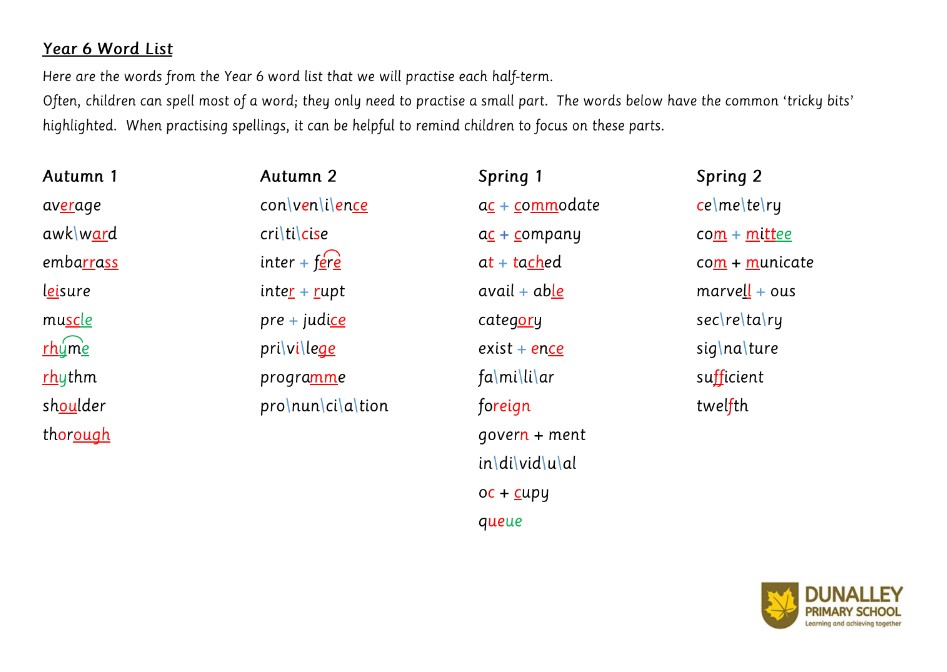
Spelling and grammar is taught in context within our English lessons plus discrete sessions for spelling using Essentials for Spelling. The children will have lists of spellings based on the strategies taught in class as well as words identified from the National Curriculum that they are required to learn to spell these are personalised to the individual.
Handwriting
Children will continue to develop a fluent, joined handwriting style for writing in all subjects.
Maths
Maths is taught daily. Key concepts this term will include:
- 1 Read, write and order numbers up to 10,000,000
- 2 Multiply and divide numbers by 10, 100 and 1000
- 3 Multiply numbers up to 4 digits by a 2-digit number choosing efficient methods
- 4 Divide numbers up to 4 digits by a two-digit number choosing efficient
- methods and interpreting the remainders
- 5 Calculate intervals across zero
- 6 Describe and plot positions on a 2-D grid as coordinates in the four quadrants
- 7 Reflect and translate shapes
- 8 Simplify fractions
- 9 Compare and order fractions, including fractions > 1
- 10 Know and use simple fraction, decimal and percentage equivalents
- 11 Compare and classify 2-D and 3-D shapes
- 12 Know and use angle properties of straight lines, at a point and shapes
- 13 Draw simple shapes using given lengths and angles
As with any subject, developing the children’s confidence and enjoyment is absolutely essential. In order for the children to enjoy success, it will be important for all children to develop their quick recall of number bonds and times tables facts. If these have slowed down through a lack of practice or there are still tables that need to be memorised, these skills can be rapidly improved with short spells of daily practice. TT Rock Stars remains useful for this purpose. All children have a login to access this.
Science and DT
During this half term the children will be learning about electricity and developing their understanding of circuits. This will link with work in DT when the children will design and make a board game with an electrical circuit. After the half-term break, the children will be exploring the way light behaves, including light sources, reflections and shadows.
All foundation subjects being covered during the term
Geography
The children will be learning about the water cycle, features of a river along its course and the location of significant UK rivers. After half term, we will study the human uses of rivers and the causes of flooding.
Art
The children will be painting landscapes linked to our geography topic and developing a range of watercolour techniques. We will also be learning about David Hockney’s approaches to landscape painting.
Computing
After half term, the children will be learning about computing systems and networks. We will also continue to consider the importance of online safety, supported by workshops delivered by the police.
French
This term, the children will be studying the module ‘Quel temps fait-il?’ They will practise a range of vocabulary and phrases connected to the weather, building both confidence and accuracy in their spoken French.
RE and PSHE
In RE, the children will begin the term by exploring the question “Why might Hindus want to be good?” before moving on, in the second half, to consider “How and why do Christians follow the example of Jesus?” In PSHE, our learning will focus first on Being Me in My World and then on Celebrating Differences, encouraging the children to reflect on themselves and their relationships with others.
Music
After half term, the children will be learning about jazz and will have opportunity to improvise by using selected notes from a scale when performing to a musical accompaniment.
Knowledge Organisers
Please find knowledge organisers for maths, science and geography for this term in the links below.
Physical Education
PE for the first half term will focus on invasion games starting this half term with hockey and football followed next term with tag rugby and a fitness unit of work.
PE days are currently Monday and Thursday for 6NJ and Tuesday and Friday for 6LJ
Homework
A range of maths and English activities will be set to reinforce the learning in class. Homework will normally be set on a Friday with an expectation that it will be ready to be checked in class on the following Wednesday. Children should be able to do this independently, but they should speak to their class teacher if they are struggling.
As mentioned above, reading continues to be a priority and the children should also be learning and consolidating all their multiplication tables as well as learning their spelling lists.
If you do have any questions about the curriculum, please do come and speak to us at the end of the school day or contact us by email using dunalley@dunalley.gloucs.sch.uk
Knowledge Organisers
Spellings